
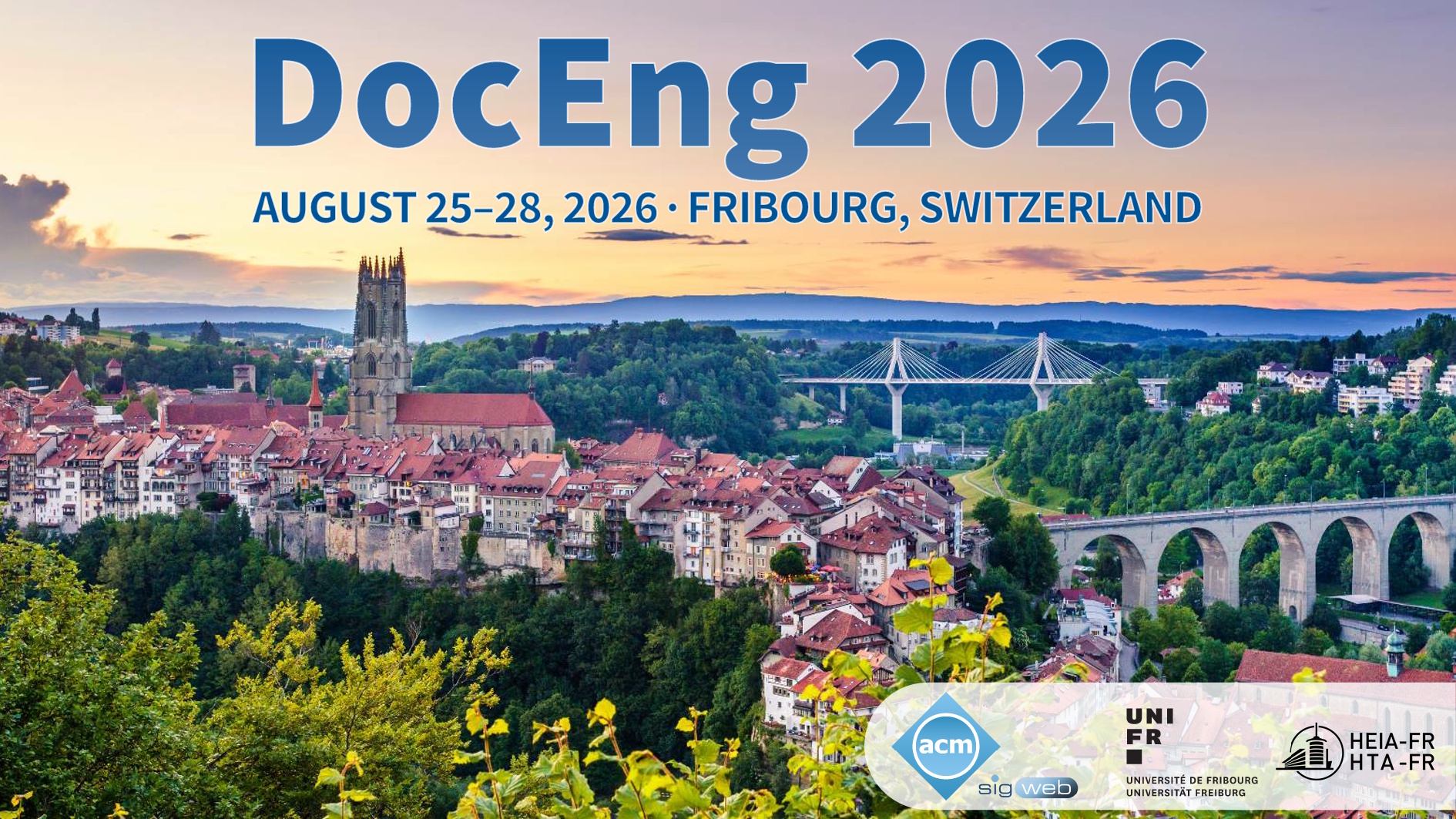
The 26th ACM Symposium on Document Engineering
August 25, 2026 to August 28, 2026
HES-SO / University of Fribourg, Switzerland
Programme
DocEng 2026 took place on August 25–28, 2026. The full programme remains online for reference, and the proceedings are published in the ACM Digital Library (ISBN 979-8-4007-2786-3).
Conference Format
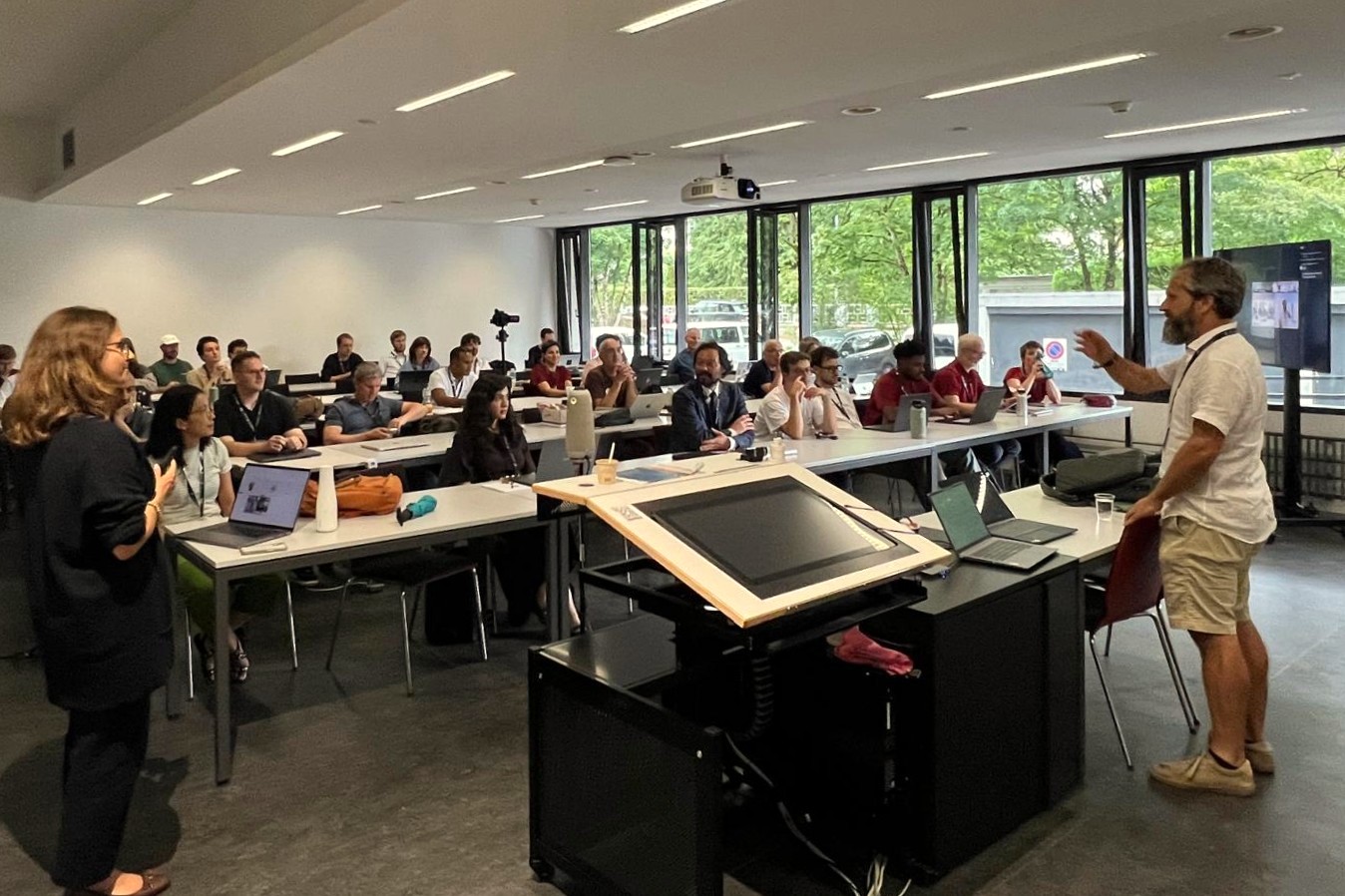
DocEng is a single-track conference. The symposium ran from Tuesday, August 25 to Friday, August 28, 2026.
Tutorial day – Tuesday, August 25
Four tutorials in two parallel morning and afternoon slots, followed by the welcome apéro.
Days 1 to 3 – Wednesday, August 26 to Friday, August 28
Main conference programme: keynotes, paper presentations, demonstrations, poster sessions and the competition reports. The WoLDE26 workshop ran on Friday afternoon, August 28, and the symposium closed at 5:45 pm — see the Workshops & Tutorials page.
Sessions were held in room E040 at PER21, Pérolles Campus; the two Tuesday tutorial rooms were A230 and B130. See Venue & Travel.
Programme Components
- 2 keynote presentations
- 10 long paper presentations
- 9 short paper presentations
- 4 demonstrations
- Poster session
- 2 competition reports
- 4 tutorials and the WoLDE26 workshop
- Birds-of-a-feather sessions and the ACM SIGWEB Town Hall
- Award ceremony and the DocEng'27 announcement
- Coffee breaks, lunches and the social programme
Social Programme
Included in every full conference registration.
| Day | Event | Time & place |
|---|---|---|
| Tuesday 25 | Welcome apéro | from 6:00 pm, Zone A, ground floor of PER21 |
| Wednesday 26 | Excursion to Gruyères | meet 3:45 pm at the coach stop on Chemin des Fougères, departure 4:00 pm |
| Thursday 27 | Gala dinner | old-town walk 6:30 pm from St. Nicholas Cathedral, then L'Aigle Noir: apéritif 7:30 pm, dinner from 8:15 pm |
| Friday 28 | Informal farewell apéro at Le Cyclo | from 6:00 pm, weather permitting, at participants' own expense |
Awards
🏆 Best Paper Award
Safe Invoice Data Extraction: FPR-Constrained Validation with VLM Denoising
Valentina Curcio, Mattéo Galfré and Olivier Le Van — Cegedim🎓 Best Student Paper Award — sponsored by River Publishers
DocLayout-MM-RAG: A Layout-Aware Annotation Framework for Grounded Question Answering over Documents
Andrew Brown, Christopher Baker, Karen Rafferty and Barry Devereux — Queen's University Belfast
Keynotes
DocEng'26 was delighted to welcome its keynote speakers.
Keynote 1
Explainable Document Analysis for Domain Experts: Combining Deep Learning with Rule-Based Methods
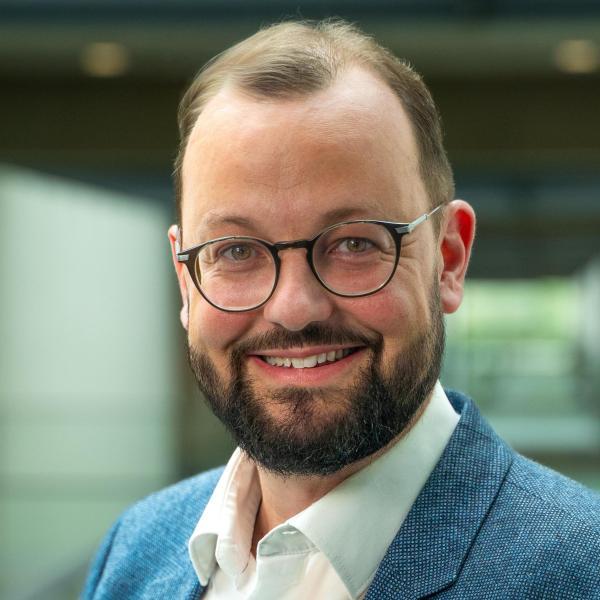
Prof. Dr. Andreas Fischer
University of Fribourg
Wednesday, August 26 — 9:20
Abstract
With the advent of end-to-end trainable, data-driven deep learning methods, a large number of classical document analysis tasks, such as layout analysis, OCR, handwriting recognition, and information retrieval underwent significant improvements in accuracy. However, at the same time, the "black box" effect of these methods remains challenging for domain experts, who rely on automatic document analysis in their profession, and who have to take responsibility for their observations and conclusions. In this talk, I will present several case studies that highlight benefits of combining deep learning with rule-based methods, with a view to explainability, accuracy, and human annotation effort.
Biography
Andreas Fischer is Full Professor at the University of Fribourg, Switzerland, in the Department of Informatics, where he leads the research group on AI for the Benefit of Human Experts (AIBEX).
He obtained his PhD at the University of Bern, conducted postdoctoral research at Concordia University and Polytechnique Montréal, and held, prior to his appointment, a combined position in Fribourg as Lecturer at the University of Fribourg and as Professor at the School of Engineering and Architecture of Fribourg.
Andreas Fischer's research interests include deep learning, pattern recognition, document analysis, handwriting recognition, digital humanities, and digital pathology. He has published over 120 peer-reviewed articles in international journals and conference proceedings on these topics.
Andreas Fischer is a member of the governing board of the International Association of Pattern Recognition (IAPR), where he represents Switzerland, and Chair of the IAPR technical committee on reading systems (TC11).
Keynote 2
Docling: Converting Complex Documents into AI-Ready Structured Representations
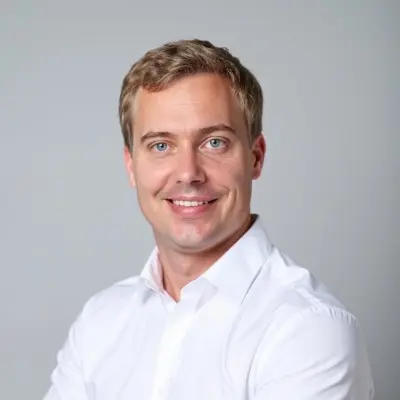
Dr. Peter Staar
IBM Research Zürich
Thursday, August 27 — 9:00
Abstract
Documents remain one of the primary carriers of knowledge in scientific, enterprise, and governmental settings, yet their complex visual structure—comprising layouts, tables, figures, and multi-column text—poses significant challenges for modern AI systems. Large language models do not natively understand such document structures, while traditional PDF parsers often lose semantic and structural information, leading to noisy or incomplete representations. In this talk, we present Docling, an open-source document processing framework designed to transform heterogeneous documents into high-quality, structured representations suitable for AI applications. Docling combines layout analysis, OCR, table structure recognition, and document assembly into a unified pipeline that produces rich, LLM-friendly outputs such as structured JSON and Markdown while preserving visual grounding and reading order. The framework supports multiple input formats and integrates with modern AI ecosystems, enabling applications including retrieval-augmented generation, schema-based information extraction, and agent-driven workflows. We discuss the architecture of Docling, its emerging ecosystem of models and tools, and its role in enabling scalable, privacy-preserving document intelligence through local execution and open standards. By bridging the gap between visually complex documents and machine-readable knowledge, Docling provides a foundation for reliable document understanding in next-generation AI systems.
Biography
Peter Staar manages the 'AI for Knowledge' group at the IBM Research - Zurich Laboratory. The group focuses on the development of the Deep Search platform, which consists of cloud native services that ingest large corpora of technical documents and extracts the knowledge contained in them.
Peter joined the IBM Research - Zurich Laboratory in July of 2014 as a post-doctoral researcher. The Belgium-born scientist first came to IBM Research as a summer student in 2006. Prior to joining IBM Research, he was a post-doctoral researcher in Theoretical Physics and PASC (Platform for Advanced Scientific Computing) at the Swiss Federal Institute of Technology (ETH) in Zurich, Switzerland.
Peter won the prestigious ACM Gordon Bell award in 2015. Other significant academic achievements include 'Best Paper Award' at IPDPS 2016 (for novel, linear-scaling graph analytics) and 'Applied AI Application Award' at IAAI 2021 (for novel PDF document conversion ML models).
Peter leads the technical steering committee of Docling, the leading open-source AI framework for document processing, manipulation and generation.